Real Estate Blog
Writing an Offer: There’s More to It Than the Price
Buying a home in Calgary? Learn what goes into a strong offer, including price, deposit, conditions, possession dates and contract terms.
READ POSTStart with what matters to you.

Buying a home in Calgary? Learn what goes into a strong offer, including price, deposit, conditions, possession dates and contract terms.
READ POST
Use Thanksgiving weekend to get your Calgary home ready for winter with this simple fall checklist for maintenance, outdoor cleanup ...
READ POST
Make Thanksgiving cranberry sauce from scratch with fresh cranberries, orange and one special ingredient that gives this classic side ...
READ POST
Learn why Calgary home buyers benefit from choosing one dedicated Realtor instead of working with multiple agents or relying on the ...
READ POST
You found the house. Now comes the part where a lot of buyers assume the conversation is simply:
“What should we offer?”
Price matters, of course. But a purchase contract includes much more than the number at the top, and sometimes the terms surrounding the price can be just as important.
A good offer is not just about being competitive. It is about protecting you while also putting together terms the seller can realistically work with.
The obvious place to start is price. Before writing an offer, I usually want to look at more than the list price. We may review comparable sales, current competition, how long the property has been listed, previous price changes and what we know about the current market.
The goal is not simply to decide how much you can offer. It is to decide what the property is worth to you and how that number fits into the overall strategy of the offer.
The deposit forms part of the purchase contract and shows the seller that you are serious about completing the transaction. It is not an additional cost on top of the purchase price. If the sale completes, the deposit is credited toward the purchase price.
Remember, the amount of the deposit, when it needs to be delivered and how it is held all matter. Those details need to be clearly set out in the contract.
Most buyers are familiar with financing and home inspection conditions, but there can be others depending on the property.
A condominium purchase may include a condition for reviewing condominium documents. A rural property may require additional inspections or testing. A buyer may also need a condition related to the sale of their current home.
Conditions need clear deadlines, and buyers should understand exactly what needs to happen before they remove them. Once conditions are waived, the contract generally becomes firm and binding.
There are situations where buyers consider writing an offer without conditions, particularly in a competitive market. That can make an offer more attractive to a seller, but it also removes important protections. It is a decision that should be made with a clear understanding of the risk, not simply because someone says, “That’s what you have to do to win.”
Possession date is another piece buyers sometimes underestimate.
You may want the house as quickly as possible, while the seller may need additional time to move or complete their own purchase. Sometimes flexibility on possession can make an offer more appealing without increasing the purchase price at all. That is why I always want to understand not only what matters to my buyer, but what we know about the seller’s needs as well.
This is one of those details that feels small until it causes a problem.
Attached items will generally remain with the property unless the contract says otherwise. Unattached items generally do not, unless they are specifically included. That means we may need to talk about things such as appliances, window coverings, garage shelving, televisions and mounts, outdoor structures or anything else you expect to be there when you take possession.
If something matters to you, it should be clear in the contract.
Offers contain important deadlines.
There is a deadline for the seller to accept the offer, deadlines for satisfying conditions, deposit timing and, eventually, possession.
These are not filler dates. They affect how the transaction unfolds, and they need to give you enough time to properly complete whatever due diligence you have agreed to do.
This is one of the most important things for buyers to understand.
Imagine a seller receives two offers:
One has a slightly higher price but several conditions, a difficult possession date and a smaller deposit.
The other is slightly lower but has terms that fit the seller’s situation much better.
The seller may prefer the second one.
That does not mean you should automatically remove conditions or give the seller everything they want. It means we look at the whole offer.
Price is part of the strategy. So are the terms.
Writing an offer is not about filling in blanks on a form. My job is to help you understand what you are agreeing to, identify the areas we need to think through and build an offer that reflects both the property and your circumstances. Sometimes that means being aggressive or it may mean protecting yourself with conditions. Sometimes it means changing the possession date instead of changing the price, and, believe it or not, sometimes my advice is that the best offer is the one we do not write.
The goal is not simply to get an accepted offer.
It is to get you into the right property on terms you understand and are comfortable with.
If you read Part 1 of the Calgary Home Buyer Series, you already know how important it is to have someone representing your interests. Writing the offer is where that really starts to matter.
If you’re thinking about buying and have questions about how an offer is actually put together, send me a message. I’m always happy to talk through the process before we’re in the middle of it.
Erika Dix, REALTOR®
The Real Estate District




Homemade cranberry sauce is one of those things that’s incredibly easy to make, but tastes so much better than anything from a can. This version is bright, tart, just sweet enough, and has a little extra something that makes people ask what’s in it.

Add the cranberries, sugar, orange juice, water, orange zest, cinnamon and salt to a saucepan.
Bring to a gentle boil over medium heat, then reduce the heat and simmer for about 10 to 12 minutes. The cranberries will begin to burst and the sauce will thicken as it cooks.
Remove from the heat and stir in the orange liqueur. Let the sauce cool completely before serving. It will continue to thicken as it cools.
You can make it a day or two ahead and keep it covered in the refrigerator.
The orange liqueur is what gives this cranberry sauce that extra little layer of flavour. It brings out the citrus, softens the tartness of the cranberries and makes the whole thing taste just a little more special.
It’s the kind of recipe that still tastes like traditional Thanksgiving cranberry sauce, just better.
When buyers first start looking for a home, it can feel logical to keep their options open. You might call the listing agent on one property, another Realtor on the next, and someone else when a friend sends you a listing. The thinking is that more Realtors means more help.
In reality, it usually works the opposite way.
Buying a home is not just about bedrooms, bathrooms and price.
The longer I work with a buyer, the more I learn about what really matters to them. Sometimes I can identify those preferences before they can even put them into words themselves. A buyer may say they liked a home, but after talking it through, we realize they disliked the lack of natural light, the busy street, the layout or the amount of work it needed. That helps me ask better questions and guide the search more effectively.
It is easy to look at a new listing and think, “This looks great,” without stopping to ask, “Didn’t I dislike this exact feature in the last house?” That kind of pattern recognition only happens when one Realtor is involved consistently.
If you are calling a different agent every time, each one is starting from scratch.
Agents value loyalty.
When I know someone has chosen me as their Realtor, I am invested in their search. I am watching listings, researching properties, looking at comparable sales, booking showings and thinking ahead to what may matter when it is time to write an offer.
If I know a buyer is also working with several other agents and simply calling whoever is available, it becomes a very different relationship.
The clients who commit to working with me get my commitment in return.
Opening the door is one of the smallest parts of my job.
When you are my represented buyer, I can help you evaluate value, identify concerns, discuss strategy, structure an offer, explain conditions and negotiate on your behalf.
That is very different from contacting the listing agent directly because the listing agent represents the seller.
If you choose to proceed without your own representation, that agent is not there to advise you on what is best for you or advocate for your position. Their obligation is to the seller.
One of the biggest benefits of having your own Realtor as a buyer is that, in many Alberta residential transactions, the seller pays the compensation offered to the buyer’s brokerage as part of the sale. In other words, buyers will often have their own representation without writing a separate cheque to their Realtor at closing.
That said, compensation is negotiable and it is not identical in every transaction. Your buyer representation agreement should clearly explain how your brokerage is being paid and whether there could ever be a difference between the compensation being offered by the seller and the fee agreed to in your representation agreement. RECA’s buyer representation agreement specifically allows the buyer’s brokerage to ask the seller or seller’s brokerage to pay its fee, while also addressing what happens if there is a shortfall.
There is also a common misconception that if you choose not to have your own Realtor, the compensation that may have been offered to a buyer’s brokerage automatically becomes a discount to you.
It does not.
The listing agent represents the seller and is there to protect the seller’s interests. They are not there to advocate for that compensation to be redirected to you as a buyer. Any change to the purchase price, compensation, or other terms would still need to be negotiated and agreed to as part of the transaction.
This is another reason I think buyers should understand the difference between being represented and simply dealing directly with the listing agent.
There is nothing wrong with interviewing more than one Realtor. You should! Ask how they work, how they communicate and what they actually do for buyers beyond sending listings and opening doors. Once you find the right person, give that relationship a chance to work.
You do not need five Realtors competing for your business. You need one Realtor who understands what you are looking for, knows how to guide you through the process and is genuinely invested in helping you make a good decision.
Thinking about buying in Calgary and not sure where to start? I’m always happy to walk you through the process before you ever step inside a showing.
Erika Dix, REALTOR®
The Real Estate District

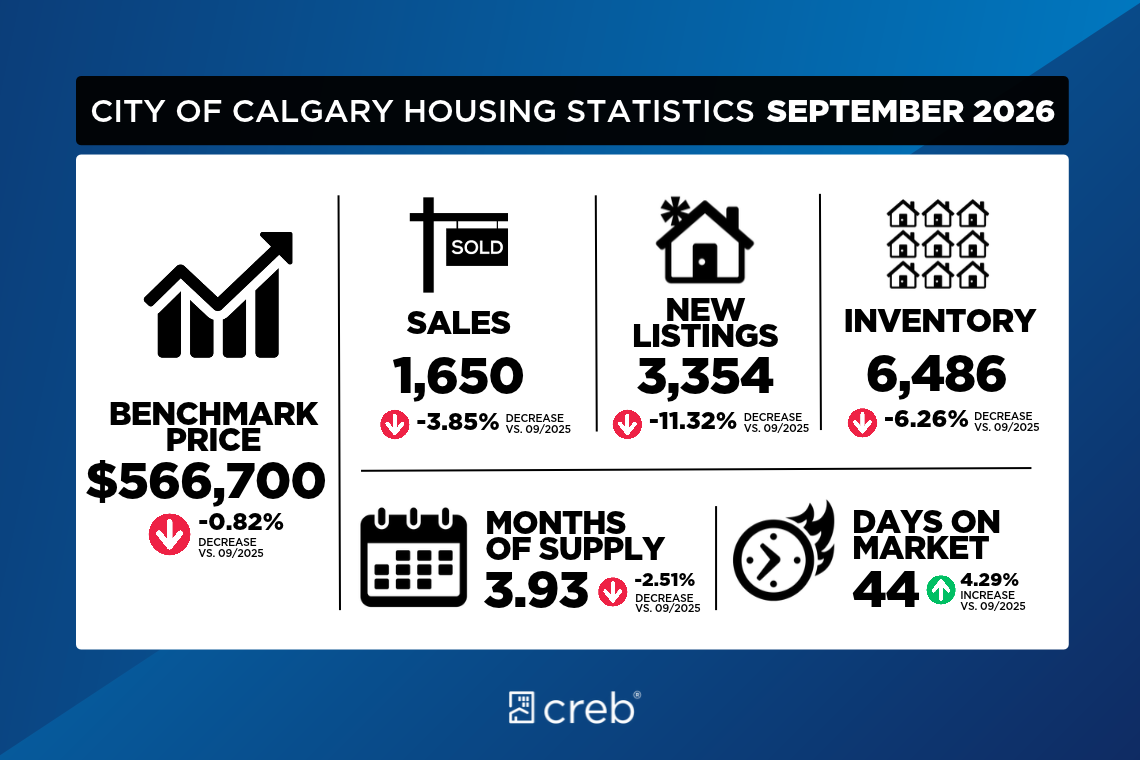
September sales totalled 1,650 units, similar to August and nearly four per cent lower than in September 2025. While September sales typically pull back compared with August, stronger detached home sales helped prevent the typical seasonal pullback.
At the same time, new listings also rose from August, causing the sales-to-new-listings ratio to fall to 49 per cent, leaving inventory levels relatively stable compared with August. Stable sales and inventory levels in September prevented any change in the months of supply compared with August, which remained at just under four months.
While the overall market is showing higher supply levels compared with sales activity, conditions vary significantly by property type. Detached properties remain in balanced territory, and the monthly boost in new listings supported gains in sales in September. Meanwhile, higher supply levels for apartment and row homes are contributing to buyer market conditions, as demand is spread across more alternatives in the rental and new home markets.
“The variation in market conditions between property types is related to where the supply was added. The construction boom over the past three years was mostly driven by gains in higher-density sectors, significantly increasing the supply of apartment and row-style homes,” said Ann-Marie Lurie, Chief Economist at the Calgary Real Estate Board (CREB®). “Meanwhile, detached homes did not see the same boost in construction, preventing broad-based supply growth. Thanks to a stronger job market and slower but positive net migration, housing demand has remained strong enough to absorb some of the supply, but not enough to offset the high-density supply added to the market, resulting in a more significant impact on prices for higher-density homes.”
As the market moves through the fall, it is not unusual to see some unadjusted monthly declines in prices. However, many of these adjustments were seasonal, as seasonally adjusted figures show that prices in September are relatively stable compared with August. The unadjusted residential benchmark price was $566,700, nearly one per cent lower than last year. Most of the price adjustments have occurred in higher-density row and apartment-style units, which have reported year-over-year declines of eight per cent and six per cent in September. Meanwhile, detached prices are one per cent lower than last year, mostly due to declines in the North East, East and North districts.
Sales in September reached 896 units, up from August and more than four per cent higher than last year. The improvement in sales was partly due to a boost in new listings in September compared with August, giving consumers more options. With a sales-to-new-listings ratio of 52 per cent and a months of supply at just over three months, conditions remained relatively balanced. However, conditions have varied across the city, with less than three months of supply in the North West, West and South districts, and nearly six months of supply in the North East district. While the overall market is relatively balanced, the unadjusted benchmark price was one per cent lower than last year. The decline was primarily driven by steep pullbacks in the oversupplied North East district. Meanwhile, prices were higher than last year in both the City Centre and West districts.
The year-over-year gain in sales was not enough to offset earlier declines, as year-to-date sales have declined by two per cent for a total of 1,678 sales. The decline in sales matched year-to-date declines in new listings, but a monthly boost in September listings caused the sales-to-new-listings ratio to dip to 45 per cent, contributing to monthly inventory gains and pushing months of supply to nearly four months. While this is a shift from the tighter conditions reported in this sector throughout most of 2026, it is too early to say whether this will continue into the final quarter. While unadjusted prices did trend down in September, much of the decline was in line with typical seasonal behaviour. The unadjusted September benchmark price was $685,200, comparable to levels reported last year at this time.
Sales in September eased compared with August, while new listings rose, causing the sales-to-new-listings ratio to drop to 45 per cent. This also contributed to higher inventory levels compared with both last year and August, resulting in the months of supply rising above four months for the first time since the beginning of the year. Additional competition from new units has weighed on resale activity, as the price spread between new and resale homes remains relatively narrow. The additional supply choice for buyers has also weighed on row prices, but not to the same extent as in the apartment sector. As of September, the unadjusted benchmark price was $412,400, down nearly six per cent from last year. While prices have declined across all districts, the steepest declines, at more than 11 per cent, have occurred in the North East and East districts, while the smallest declines have occurred in the North West, at two per cent.
Apartment sales improved from August, slowing the year-over-year pace of decline to 14 per cent. New listings also rose over August, with 343 sales and 717 new listings, leaving the sales-to-new-listings ratio at 48 per cent. The monthly gains in sales supported modest reductions in inventory levels and prevented any further increases in the months of supply, which remained just above five months. The excess supply of apartment-style units has weighed on prices throughout most of the year. As of September, the unadjusted benchmark price fell to $291,400, down more than one per cent compared with August and more than eight per cent lower than last September. While some of the monthly decline is seasonal, seasonally adjusted prices continued to decline.
Sales in Airdrie continued to slow in September, contributing to the year-to-date decline of 13 per cent. Sales slowed across all property types, as increased competition from the new home market and competing markets in Calgary and other surrounding areas are weighing on demand. While sales eased in September, new listings also slowed and inventories trended down compared with August. However, the pullback in sales outpaced the inventory declines and the months of supply rose to four months. Additional supply choice continues to weigh on prices as well. As of September, the unadjusted total residential benchmark price was $505,800, nearly four per cent lower than last year. Prices have eased across each property type, with the largest declines occurring for higher-density homes.
Despite the monthly pullback, sales remained higher than last year, and on a year-to-date basis, sales have increased by nearly six per cent. The rise in sales came with an increase in new listings, with new homes accounting for nearly 30 per cent of this year’s total listings. With 163 new listings and 68 sales, the sales-to-new-listings ratio dropped to 42 per cent in September, the lowest monthly level seen since January. This contributed to higher inventory and pushed the months of supply to five months. Despite this one-month shift, prices improved compared with August and are similar to last year’s levels.
An increase in new listings compared with sales caused the sales-to-new-listings ratio to drop to 76 per cent in September, still higher than most other areas, but below the ratios of more than 80 per cent reported over the past two months. With 122 units in inventory and 56 sales, conditions remain relatively tight with just over two months of supply. Despite tighter conditions, increased competition from the new home market and competing markets has weighed on prices earlier this year. However, with an unadjusted total residential benchmark price of $606,800 in September, prices are stable relative to last September and are only one per cent lower on a year-to-date basis.
Sales in September rose, helping to offset some of the gains in new listings. While the sales-to-new-listings ratio remained low at 38 per cent, inventory levels trended down from August and brought the months of supply back below six months. Significant new construction in the area, along with competing supply in Calgary and other surrounding areas, has weighed on prices in Chestermere over the past few months. However, year-to-date prices are only one per cent lower than last year. The unadjusted total residential benchmark price was $690,200 in September, down from August but similar to last year’s levels.

September arrives and suddenly it feels like we're supposed to start shutting everything down.
The patio furniture gets covered, the garden tools start disappearing and we begin preparing ourselves for the inevitable morning when Calgary decides it's winter without consulting any of us.
But I'm not quite ready to give up on the garden yet.
September can actually be one of the nicest months outside. The days are still warm, the evenings are cooler, and many plants are putting on one last show before the season ends. Instead of putting the garden to bed, I think of September as the month to help it transition.
It's tempting to start cutting everything back as soon as plants begin looking a little tired, but not everything needs to disappear.
Remove dead annuals and anything diseased or damaged, but consider leaving some perennials and ornamental grasses standing. They can add texture to the garden through fall and winter, and some provide food and shelter for birds and beneficial insects.
This is also a good time to keep up with weeding. Future-you will appreciate having fewer weeds waiting when the snow melts.
Cooler temperatures can make it easy to forget about watering, especially once the garden isn't demanding quite as much attention.
But trees, shrubs and perennials still need moisture as they prepare for winter. If September is dry, continue watering, particularly newer plants that are still establishing their roots.
A good drink heading into colder weather can make a big difference.
Not everything should be heavily pruned in the fall.
Some shrubs set next year's flowers on older growth, and cutting them back now can mean accidentally removing next year's blooms. Hydrangeas in particular can have very different pruning requirements depending on the variety.
When in doubt, leave it until spring or check what your particular plant prefers before cutting.
One of my favourite things about fall gardening is that you're quietly preparing a surprise for yourself.
September and early fall are a great time to start thinking about spring bulbs. Tulips, daffodils, alliums and other hardy bulbs go into the ground now and then disappear from your mind completely.
Until one day, after months of snow and brown grass, something green starts poking through.
Worth it every time.
Mostly, don't rush it.
Pick the last flowers. Bring a few inside. Sit outside with your coffee when the sun is shining. Let the hydrangeas change colour and the grasses move in the wind.
There will be plenty of time to clean everything up, cover the furniture and get the yard ready for winter.
September isn't quite the end of the garden.
It's just the garden changing seasons.

September desserts should feel a little like fall without going completely overboard.
We're not quite at pumpkin-everything season, but cooler evenings definitely make turning the oven on sound good again. This Warm Pear & Cinnamon Crumble sits perfectly somewhere in between.
The pears get soft and caramelized, the topping gets buttery and crisp, and the cinnamon makes the whole house smell like you've put significantly more effort into dessert than you actually have.
And obviously, it should be served warm with vanilla ice cream.
Serves 6
Ingredients
For the Pear Filling:
5–6 ripe but firm pears, peeled and sliced
2 tbsp brown sugar
1 tbsp maple syrup
1 tbsp lemon juice
1 tsp cinnamon
½ tsp vanilla
Pinch of salt
For the Crumble:
¾ cup rolled oats
½ cup flour
½ cup brown sugar
½ tsp cinnamon
½ cup cold butter, cubed
½ cup chopped pecans, optional

Preheat your oven to 375°F and lightly butter a baking dish.
Toss the sliced pears with the brown sugar, maple syrup, lemon juice, cinnamon, vanilla and a pinch of salt. Spread them evenly in the baking dish.
In a separate bowl, combine the oats, flour, brown sugar and cinnamon. Add the cold butter and work it into the mixture with your fingers until you have a coarse, crumbly texture. Stir in the pecans if you're using them.
Scatter the crumble generously over the pears.
Bake for 35–40 minutes, until the pears are bubbling around the edges and the topping is golden and crisp.
Let it sit for a few minutes before serving, mostly so you don't immediately burn your mouth.
Spoon it into bowls while it's still warm and add a scoop of vanilla ice cream on top.
Simple, cozy and just fall enough for September.

I've always thought September feels a little more like a fresh start than January does.
Maybe it's all those years of back-to-school routines ingrained in us, but there's something about September that makes life feel like it's starting again. Summer is wonderful, but it's also wonderfully chaotic. Weekends away, later nights, dinners outside, vacations and plans that somehow turn a regular Tuesday into something completely different.
And then September arrives.
Suddenly, there's something comforting about knowing what day of the week it is again.
I'm usually ready for a little routine by now. Not a dramatic new season, new me kind of reset. I'm not reorganizing my entire house or waking up at 5 a.m. to become a different person.
I just want to cook dinner again.
I want groceries in the fridge, a book beside the couch and a weekend that doesn't require packing a bag. I want to get back to those little routines that aren't particularly exciting but somehow make life feel settled.
The funny thing is, we often treat September like summer is officially over. But some of Calgary's nicest days happen this time of year. The evenings are cooler, but the patios aren't closed. The garden is changing, but there's still plenty happening out there. It's still warm enough for coffee outside in the morning or dinner on the deck — you might just need a sweater.
There's no need to rush into full fall mode simply because the calendar changed.
Maybe that's what I like most about September. Summer tends to pull us away from home. September brings us back to it.
Back to the kitchen. Back to routines. Back to evenings on the couch and meals around the table. Back to the ordinary parts of life that make up most of our days.
So I'm not quite ready for pumpkins everywhere or counting down to the first snowfall.
For now, I'm happy with September, a little bit of summer left, a little bit of fall creeping in, and the familiar rhythm of everyday life finding its way back home.

September is a bit of a reset.
Summer schedules wind down, kids head back to school, vacations wrap up, and suddenly everyone seems to return to their regular routines. The days get a little shorter, mornings get cooler, and here in Calgary, we start remembering that fall can arrive whenever it feels like it.
The real estate market feels that shift too.
Selling your home in September isn't necessarily better or worse than selling in July or October. It's just different. Some of the little things that didn't matter nearly as much during a bright July afternoon start to become more noticeable as we move into fall.
During the summer, outdoor spaces can do a lot of the heavy lifting. A sunny backyard, beautiful deck or garden in full bloom can immediately capture a buyer's attention.
By September, buyers start spending a little more time noticing what's happening inside.
How does the living room feel? Does the kitchen feel like somewhere people would gather? Is there enough storage for coats, boots and all the things that inevitably start collecting near the door?
Lighting becomes more important too. A 7:00 p.m. showing in June and a 7:00 p.m. showing in September can feel completely different. Turn on lights and lamps before buyers arrive, replace burnt-out bulbs and pay attention to spaces that feel darker as the sun starts disappearing earlier.
You want buyers walking into a home that feels bright and welcoming, not searching for light switches.
September doesn't mean the yard is finished.
Calgary can give us some beautiful September weather, and buyers are still going to notice your yard, deck and outdoor spaces. Keep the lawn maintained, remove plants that have clearly finished for the season, sweep leaves and keep patios or decks looking usable.
The same goes for your front entrance. Keep the step clean, shake out the mat and clear away the everyday collection of shoes, jackets and backpacks.
And while a little seasonal warmth can be lovely, you don't need to turn the house into fall. A healthy planter, a cozy throw or a few warmer textures are plenty. Skip the pumpkin overload and heavily scented candles — you still want buyers to remember the home, not the decorations.
September also brings people back to decisions they've been putting off.
Someone who spent the summer casually watching listings may now be ready to make a move. Others may be looking ahead and realizing they'd like to be settled before winter.
That doesn't mean every September buyer is in a rush. But it does mean sellers should pay attention to how their home is positioned right now, rather than relying on what the market looked like earlier in the summer. Pricing, competition and inventory can change surprisingly quickly.
Your home doesn't need to look like a magazine, either. September homes are lived-in homes. Backpacks come through the door. Jackets start appearing again. The garden isn't quite as perfect as it was six weeks ago.
Preparing your home for sale isn't about hiding every sign that people actually live there. It's about removing enough distraction that a buyer can picture their everyday life happening there instead.
There's something about September that naturally brings our attention back home. We start settling into routines, spending longer evenings inside and thinking about the months ahead.
If you're selling, you don't need to manufacture that feeling.
You just need to give buyers enough room to feel it.

September is when I start wanting dinner to feel like dinner again.
Summer meals are great, but they're often a little thrown together — something on the BBQ, a salad, whatever is easy between plans. Once the evenings start getting cooler, I'm ready to turn the oven back on and make something that feels a little more like everyone should actually sit down at the table.
This Maple Dijon Chicken & Apples is exactly that kind of meal.
It's cozy without being heavy, the apples give it just enough fall flavour, and everything cooks together on one pan, which is really the kind of September reset I can get behind.
Serves 4
4 boneless chicken breasts or 6 boneless chicken thighs
1½ lbs baby potatoes, halved
2 crisp apples, cut into wedges
1 small red onion, cut into wedges
2 tbsp olive oil
Salt and pepper
Fresh thyme or rosemary
For the Maple Dijon Sauce:
3 tbsp Dijon mustard
3 tbsp maple syrup
2 tbsp olive oil
1 tbsp apple cider vinegar
2 cloves garlic, minced
Salt and pepper
Preheat your oven to 425°F.
Toss the potatoes and red onion with olive oil, salt and pepper. Spread them on a large sheet pan and roast for about 15 minutes.
While they're cooking, whisk together the Dijon mustard, maple syrup, olive oil, apple cider vinegar and garlic.
Remove the pan from the oven and add the chicken and apple wedges. Spoon the Maple Dijon sauce generously over the chicken and toss the potatoes and apples lightly in any extra sauce.
Return everything to the oven for another 20–25 minutes, or until the chicken reaches an internal temperature of 165°F and the potatoes are tender.
Finish with fresh thyme or rosemary and serve straight from the pan.
Add a simple green salad and some crusty bread if you want to round it out.
It's warm, a little sweet, a little savoury and exactly the kind of supper that makes a cooler September evening feel pretty good.
Maybe fall isn't so bad after all.

I can usually tell within the first few minutes. A buyer walks through the front door, pauses for just a second longer than they have at the other homes we've seen, and I know something has changed.
Maybe it's the way the morning light pours through the kitchen windows. Maybe it's the backyard they've already imagined hosting summer barbecues in, or the cozy reading nook tucked beside the fireplace. Whatever it is, they're no longer just touring a house. They're beginning to picture a life. And honestly, I love that part of the process.
Buying a home should be emotional. Home is where birthdays are celebrated, where kids grow up, where friends gather around the kitchen island talking long after dinner is over. It makes sense that we'd choose a home with our hearts as much as our heads.
The challenge is that emotions have a way of making everything else a little quieter.
Suddenly the layout that didn't quite work doesn't seem like such a big deal. The busy road out front becomes easy to ignore. The aging furnace or the lack of storage somehow feels less important because you've already started imagining where the Christmas tree will go.
That's why I believe one of the most valuable things I bring to my buyers isn't simply opening doors.
It's perspective.
While you're imagining where your furniture will go, I'm quietly paying attention to how the home functions. I'm thinking about resale, maintenance, the flow of the floor plan, and whether the things you're compromising on today might become the things that frustrate you a few years from now.
That doesn't mean I'm trying to talk anyone out of falling in love with a home. Quite the opposite. I want my clients to find the home they're excited to come back to every single day. I just want that excitement to be built on a foundation that's going to serve them long after the excitement of possession day has passed.
I've also learned that sometimes the opposite happens.
Buyers walk into a home and immediately dismiss it because the walls are painted a colour they would never choose or the light fixtures haven't been updated since the early 2000s. Meanwhile, the layout is fantastic, the neighbourhood is exactly what they've been hoping for, and the things they dislike could be changed over a weekend.
It's funny how easily we can be distracted by what's temporary and overlook what isn't.
The homes people are happiest in years later usually aren't the ones that checked every single box the day they bought them. They're the ones that fit the way they actually live.
Over the years, I've realized that buying a home isn't about finding perfection. It's about finding the place that makes sense for your life, your goals, and the season you're in.
The excitement should absolutely be there. I want my clients to walk into a home and feel something. I also want them to sleep well the night after they write an offer, knowing they made a decision with both their heart and their head.
The best home isn't always the one that gives you butterflies. It's the one you're still grateful you chose five years later.

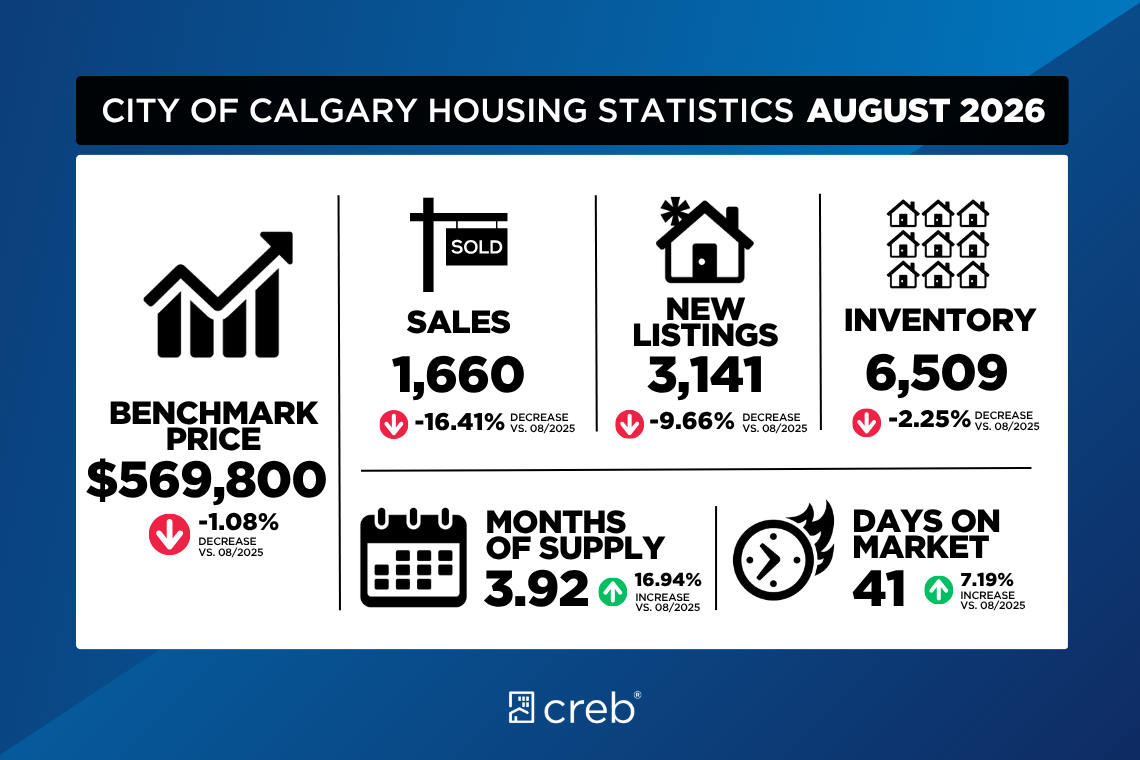
Calgary, Alberta, September 1, 2026 – Consistent with trends throughout most of 2026, both sales activity and the number of new listings coming onto the market have continued to trend down compared with 2025 levels. In August, sales in Calgary were 1,660 units, down 16 per cent compared with last year, while new listings fell by nearly 10 per cent to 3,141 units.
The pullback in sales has not occurred across all price ranges, as homes priced over $1,000,000 have recorded gains over last year. These gains have mostly been driven by detached and semi-detached homes and are also consistent with where most of the supply growth has occurred.
“While sales growth in the upper end of the market was possible thanks to improved supply choice, it also reflects longer-term confidence in our market, as some buyers are not shying away from taking advantage of the available supply,” said Ann-Marie Lurie, Chief Economist at the Calgary Real Estate Board (CREB®). “Meanwhile, we have not seen the same pickup in activity in the lower price ranges, as favourable rental conditions are slowing the transition to ownership.”
Inventory levels in August eased compared with the previous month and the same period last year, at 6,509 units. However, given the pullback in sales, the months of supply pushed up to nearly four months. Also consistent with trends throughout this year, conditions vary significantly by property type, with nearly six months of supply for apartment-style homes compared with over three months of supply for lower-density detached homes.
The relatively balanced conditions in the detached and semi-detached sector have prevented any significant shifts in prices compared with the steady price declines occurring in the oversupplied higher-density segments of the market. As of August, the total residential benchmark price was $569,800, similar to the previous month and one per cent lower than 2025 levels.
Gains in higher-priced sales were not enough to offset the pullbacks occurring for homes priced below $1,000,000, as sales fell by 12 per cent to 875 units. At the same time, new listings trended down compared with both July and August 2025 levels, reaching 1,635 units. The steeper decline in sales compared with inventory levels was enough to support a modest monthly gain in inventory levels and drove up the months of supply to over three months. Market balance varies significantly based on price range and location. The months of supply remain below three months in the North West, West, South and South East districts, and above four months in the North and North East districts. The wide range of market balance is also reflected in pricing. Year-over-year gains of over two per cent have occurred in the West and City Centre districts. Meanwhile, price declines were the steepest in the North East at over six per cent. Overall, the benchmark price in August was $744,300, similar to July and down by one per cent compared with last year.
Easing sales in August were enough to push year-to-date sales down to 1,516 units, over two per cent lower than last year’s levels. The easing of August sales was not matched by new listings, causing the sales-to-new-listings ratio to fall to 56 per cent. While inventories eased slightly compared with the previous month, they remain nearly five per cent higher than last year. The steeper monthly pullback in sales compared with inventories was enough to push the months of supply above three months, the first time this has happened since January. Despite the shift, conditions remain relatively balanced, and prices have been relatively stable. As of August, the unadjusted benchmark price was $690,500, similar to the previous month and nearly one per cent higher than last year's levels. Price gains in the City Centre, North West and West districts offset pullbacks in other areas, contributing to the annual gain.
Sales continued to ease in August compared with last year, contributing to the year-to-date pullback of 15 per cent. Additional new-home supply, along with more rental product availability, has contributed to some of the pullback in sales activity. Meanwhile, the pullback in new listings has helped prevent any further gains in inventory levels, and the months of supply remained near four months for the second month in a row. Like other sectors, conditions vary depending on location. The months of supply pushed above four months in the City Centre, North East and North districts, while remaining near three months in the West district. Prices have been easing across all districts in the city. The range of decline varied from over 12 per cent in the North East to just over one per cent in the North West district. As of August, the benchmark price was $415,200, down nearly one per cent from July and five per cent lower than levels reported last year at this time.
Apartment-style homes continue to face the most oversupply in the market, with nearly six months of resale supply. More rental supply is weighing on ownership demand from both first-time buyers and investors, which is slowing sales activity while supply levels remain elevated. In August, sales activity continued to fall, contributing to the year-to-date decline of 26 per cent. New listings have also been declining enough to prevent any further inventory gain, but not enough to help the market shift away from buyer-market conditions. Persistently high supply levels relative to demand have weighed on apartment-style prices for the past two years. As of August, the unadjusted benchmark price was $295,400, nearly one per cent lower than the previous month and eight per cent lower than 2025 levels. Prices peaked in August 2024 at $341,300 and currently sit nearly 13 per cent lower than the peak price.
Sales continued to trend down in August, contributing to the year-to-date decline of 13 per cent. Easing sales have also been met with a seven per cent pullback in new listings over the same period. Throughout most of the year, inventory levels have generally trended higher than last year’s levels and longer-term trends. Over the past few months, we have started to see the pullback in new listings relative to sales cause the sales-to-new-listings ratio to rise, and this has helped prevent any further inventory gains and kept the months of supply below four months. Nonetheless, pressure from competing markets continues to weigh on resale prices. As of August, the unadjusted total residential benchmark price was $508,800, down one per cent from July and over four per cent compared with last year at this time. Steeper price declines are occurring for higher-density apartment-style homes.
Sales improved in August, contributing to the year-to-date gain of over five per cent. Much of the gain in sales has been driven by semi-detached activity. New listings also improved in August compared with last year. The 148 new listings and 94 sales caused the sales-to-new-listings ratio to push above 60 per cent, and inventories edged down compared with the previous month. The boost in sales in August compared with inventory levels caused the months of supply to drop back down to just over three months. Nonetheless, prices still trended down in August. The unadjusted total residential benchmark price eased by nearly one per cent compared with July and is two per cent lower than levels reported last year.
Further declines in new listings likely limited sales activity in August, as the sales-to-new-listings ratio remained elevated at 81 per cent. This contributed to the monthly pullback in inventories, keeping conditions relatively tight with just over two months of supply. Okotoks has struggled with lower-than-average supply levels since 2021, but additional supply choice in competing markets is helping prevent further upward pressure on prices. As of August, the unadjusted total residential benchmark price was $608,400, over one per cent lower compared with July and nearly two per cent lower than last year's levels.
The pullback in sales continues to outpace the declines in new listings, as the sales-to-new-listings ratio dropped below 30 per cent in August. This has contributed to elevated inventory levels. While Chestermere is growing, the higher inventory, combined with the pullback in sales, has caused the months of supply to rise, reaching nine months in August. This has continued to weigh on prices, which trended down in August compared with July and currently sit over one per cent lower than 2025 levels.